
Sprains & Strains Treatment in Caro
Drug-free sprain and strain relief in Caro, MI. Hands-on chiropractic and myofascial care for soft-tissue injuries — not just rest and an anti-inflammatory.
Chiropractic care for sprains & strains
Get to the root of your sprains & strains
Also known as: Sprain, Strain, Soft-Tissue Injury
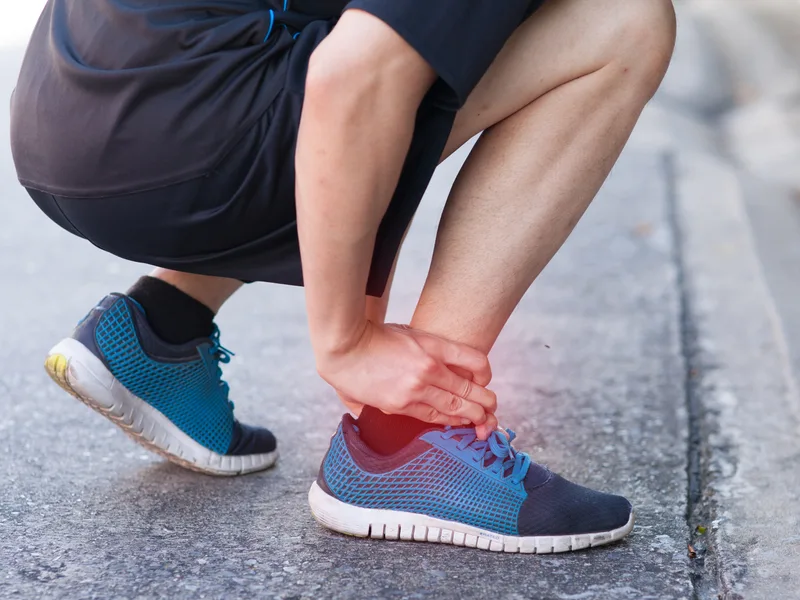
A sprain or strain can sideline you in a hurry — whether it happened at work, on the field, or just stepping wrong off a curb. At Next Level Chiropractic & Wellness in Caro, our chiropractor assesses the exact tissue and grade of injury, then builds a drug-free, active-recovery plan that guides the tissue through each phase of healing rather than leaving it to rest alone.

Symptoms of sprains & strains
- ✓Pain and tenderness at or around the affected joint or muscle
- ✓Swelling and bruising in the hours following injury
- ✓Stiffness or limited range of motion at the joint
- ✓Muscle weakness or an inability to bear weight normally
- ✓A feeling of instability or "giving way" in the joint
- ✓Increased pain with activity and relief with rest in early stages
- ✓Lingering ache or recurrent injury at the same site
Common causes
- Sudden twisting, rolling, or overstretching of a joint
- Falls or direct impact during sports or physical work
- Lifting a load that exceeds your muscle strength or control
- Repetitive overuse that weakens tissue over time
- Fatigue — tired muscles lose the coordination that prevents injury
- Poor movement mechanics or muscle imbalances that overload one structure
- Returning to activity too soon after a previous sprain or strain

Our approach
How we treat sprains & strains in Caro
- Step 1
Injury assessment and grading
We review the mechanism of injury and perform orthopedic and movement testing to identify which tissue is involved, grade the severity, and screen for fractures or complete ruptures that need immediate referral.
- Step 2
A phased, time-bound recovery plan
You get a clear explanation of what we found and a specific, time-bound plan with defined milestones — early pain control, then restoring joint motion and soft-tissue flexibility, then a realistic timeline for getting back to normal activity.
- Step 3
Hands-on soft-tissue and joint care
We combine hands-on myofascial release with chiropractic adjustments and athlete care to ease pain, restore the joint motion a sprain disrupts, and lower the chance of the injury becoming a recurring problem.
The basics
Understanding sprains & strains
The words are often used interchangeably, but sprains and strains are different injuries. A sprain is a stretch or tear of a ligament — the tough connective tissue that holds bones together at a joint. A strain is a stretch or tear of a muscle or tendon. Both occur when a structure is pushed past its limit, and both range from mild (Grade I — microscopic tearing, intact structure) to moderate (Grade II — partial tear) to severe (Grade III — complete rupture). Most Grade I and II injuries are excellent candidates for conservative, drug-free care.
The traditional advice — rest, ice, compression, elevation — is a reasonable first step in the first 48 hours, but "rest" alone is where many recoveries stall. Soft tissue heals best with controlled, progressive movement that guides collagen along the right lines and rebuilds the strength and coordination that protect the joint going forward. Chiropractic adjustments and hands-on myofascial release support that process by restoring the joint motion a sprain disrupts and easing the soft-tissue restriction that follows it.
New Patient Special
Your first visit for just $47
Our commitment to the community is to give everybody a chance to see how chiropractic care can help them so this offer includes:
- One-on-one consultation
- Comprehensive chiropractic exam
- X-rays (if needed)
- Report of findings
- Chiropractic adjustment
- Personalized care plan recommendations
New patient offer
$47
New patients only
Claim My $47 Visit or call (989) 208-3847We are sorry, but due to regulations, this offer excludes participants of federal aid programs such as Medicare or Medicaid.
Types of sprains and strains we treat
Soft-tissue injuries happen throughout the body, and where you hurt often points to the cause. At Next Level Chiropractic & Wellness, conditions we care for include:
- Ankle sprains — the most common joint sprain; lateral (inversion) sprains from rolling the foot outward respond well to early soft-tissue care and progressive balance work. See also our overuse injuries page.
- Knee sprains and strains — MCL sprains, quad and hamstring strains, and patellar tendon involvement (see knee pain) often coexist; we address both the tissue injury and the movement mechanics that created it.
- Low back strains — paraspinal and quadratus lumborum strains are a leading cause of sudden back pain; early mobilization and core activation speed recovery significantly over rest alone.
- Shoulder and rotator cuff strains — partial-thickness strains respond well to myofascial release and gentle joint work before they become full tears requiring surgery.
- Wrist and forearm strains — from falls, lifting, or repetitive work tasks; we assess for concurrent nerve involvement and build a plan that accommodates return-to-work timelines.
- Work-related sprains and strains — lifting, pushing, and awkward-posture injuries sustained on the job; we document findings for workers’ compensation and coordinate care with your employer and insurer.
When to see a chiropractor in Caro
Most sprains and strains are not emergencies — but a few situations warrant same-day evaluation. Book an appointment promptly if you notice:
- Significant swelling, bruising, or inability to bear weight immediately after an injury
- A “pop” at the moment of injury followed by immediate instability
- Pain that does not start improving after 48–72 hours of home care
- A recurring sprain at the same joint that “never fully healed”
- A work-related injury that needs to be documented for a workers’ compensation claim
- A sprain or strain that is keeping you from your sport, job, or daily activity
Red-flag signs — severe deformity, complete loss of function, intense pain disproportionate to the mechanism, or numbness and tingling — suggest a possible fracture or complete rupture. If any of these are present, we will refer you for imaging or emergency evaluation rather than beginning conservative care.
What to expect at your first visit
Your first appointment takes about 45–60 minutes and is focused entirely on understanding your injury before we treat it. We’ll:
- Review your injury history — how it happened, which movements hurt, and how it is affecting your work, sport, or daily routine.
- Assess the tissue and grade the injury — orthopedic stress tests and range-of-motion testing to identify exactly which structure is involved and rule out fractures or complete ruptures.
- Explain what we found — in plain English, with a phased recovery plan, milestones, and a realistic recovery timeline.
- Begin care when appropriate — gentle soft-tissue work and supported mobility can often start the same day to reduce pain and swelling.
You will know exactly what we are doing, why, and how long it should take — no guesswork, no open-ended visits.
Drug-free sprain and strain relief — without medication or surgery
Anti-inflammatories can take the edge off early pain, but they do not rebuild ligament strength or restore joint coordination — and suppressing inflammation too aggressively in the early days can actually slow tissue healing. Chiropractic adjustments, hands-on soft-tissue care, and a progressive return to load give the healing tissue exactly what it needs at each stage of recovery: controlled load, guided movement, and progressive challenge that rebuilds the strength and proprioception that protect you going forward. For Grade I and II injuries, the aim is a fuller recovery and a lower risk of re-injury — without a prescription or downtime from surgery.
Why choose Next Level Chiropractic
Sprain and strain care at Next Level Chiropractic & Wellness goes further than “rest and take ibuprofen.” Our chiropractor combines hands-on myofascial release and athlete care with chiropractic adjustments to restore the joint mechanics a sprain almost always disrupts, and gives you straight guidance on when to protect the injury and when it is safe to get moving again. The aim is a recovery that is complete — and far less likely to become a recurring problem.
Ready to get back to full strength? Our New Patient Special makes your first visit easy, and you can book an appointment online in under a minute.
Why choose chiropractic
Chiropractic care vs. the typical sprain-and-strain routine
| Comparison factor | Chiropractic Care | Pain Meds & Surgery |
|---|---|---|
| Addresses the root cause | ✓Restores tissue integrity and mechanics | ✕Masks the pain only |
| Drug-free & non-invasive | ✓Always | ✕Rarely |
| Active vs. passive recovery | ✓Hands-on care from day one | ✕Rest-heavy, slow return to activity |
| Personalized to your injury grade | ✓Custom phased plan | ✕Generic protocol |
| Addresses joint mechanics, not just pain | ✓Adjustments and soft-tissue care | ✕Seldom addressed |
| Reduces re-injury risk | ✓Core goal of the plan | ✕Not typically addressed |
Treatment options
Services we use to relieve sprains & strains
Chiropractic Care
Gentle, precise chiropractic adjustments in Caro, MI that restore motion to restricted joints and relieve back pain, neck pain, and headaches at the source.
Learn more →Myofascial Release
Myofascial release in Caro, MI — slow, sustained pressure that frees the connective tissue to ease chronic tightness, restore movement, and relieve stubborn pain.
Learn more →Athlete Care
Athlete care in Caro helps athletes of every level come back from strains and overuse injuries and return to play stronger, with a clear, staged plan.
Learn more →Related conditions
Other conditions we treat in Caro
What is the difference between a sprain and a strain?+
A sprain is a ligament injury — the connective tissue between bones — while a strain is a muscle or tendon injury. Sprains typically affect joints like the ankle or knee; strains usually affect muscle bellies or the tendons that attach them to bone. Treatment overlaps, but knowing which structure is involved helps us target care precisely.
Can a chiropractor help with a sprain or strain?+
Yes. Chiropractors are trained to assess and treat soft-tissue injuries with hands-on therapy, gentle joint work, and clear guidance on when to protect the injury and when to move it. For Grade I and most Grade II injuries, conservative chiropractic care is often the fastest and most complete path to recovery — no medication required.
Should I rest or stay active after a sprain or strain?+
Both — strategically. The first 48 hours call for protection and controlled rest to limit swelling. After that, progressive, guided movement consistently outperforms prolonged bed rest by encouraging the healing collagen to lay down properly and by rebuilding the strength and coordination that protect the joint. We map out exactly when and how to reintroduce activity.
How many chiropractic visits will I need for a sprain or strain?+
A mild Grade I injury may resolve in a handful of visits; a partial Grade II tear typically takes four to eight weeks of care. Our chiropractor will give you a specific, time-bound plan after your assessment — never open-ended treatment.
Will my insurance cover sprain and strain treatment?+
Coverage varies by plan. Send us your insurance details and we'll verify your benefits before your first visit. Work-related injuries may also fall under workers' compensation rather than your health plan.
When is surgery needed for a sprain or strain?+
Grade III complete ruptures — particularly of the ACL, Achilles tendon, or major shoulder ligaments — often require surgical repair. We screen for these during your exam and refer immediately if we suspect a complete tear. For partial tears and milder injuries, conservative care is typically the first and best step.
How soon should I be seen after a sprain or strain?+
As soon as possible, ideally within the first few days. Early assessment rules out fractures and complete tears, and early guided care significantly shortens recovery compared to waiting until pain forces you in.
Do you treat ankle sprains?+
Absolutely. Ankle sprains are among the most common soft-tissue injuries, and lateral ankle sprains are notorious for recurring when the surrounding muscles and proprioceptors are not fully retrained. We treat the sprain and work to rebuild the stability that protects the joint going forward.
Do you treat work-related sprains and strains?+
Yes. We treat work injuries across the Caro area and surrounding Thumb communities, and we can document your injuries for workers' compensation. Getting evaluated quickly is important for your claim and your recovery.
What causes recurring sprains at the same site?+
A sprain that "keeps coming back" is almost always a recovery problem, not a bad-luck problem. If the muscles, tendons, and proprioceptors around the joint were not fully retrained after the original injury, the joint remains unstable and re-sprains easily. Our care is aimed at exactly this — restoring the joint motion and soft-tissue flexibility an incompletely healed sprain leaves behind, with honest guidance about returning to activity at a sensible pace.