
Spinal Decompression in Caro
Non-surgical motorized spinal traction in Caro gently stretches the spine to relieve herniated discs, sciatica, and chronic neck and back pain — drug-free.
Next Level Chiropractic & Wellness
Spinal Decompression in Caro
If a herniated disc, sciatica, or chronic back pain has you looking for a non-surgical answer, spinal decompression therapy at our Caro clinic may be exactly what you need. Our chiropractor uses a motorized traction table to gently stretch your spine in precise, computer-controlled cycles — relieving pressure on compressed discs and the nerves around them without drugs, injections, or surgery. It's a conservative, non-surgical option for disc-related back and neck pain.
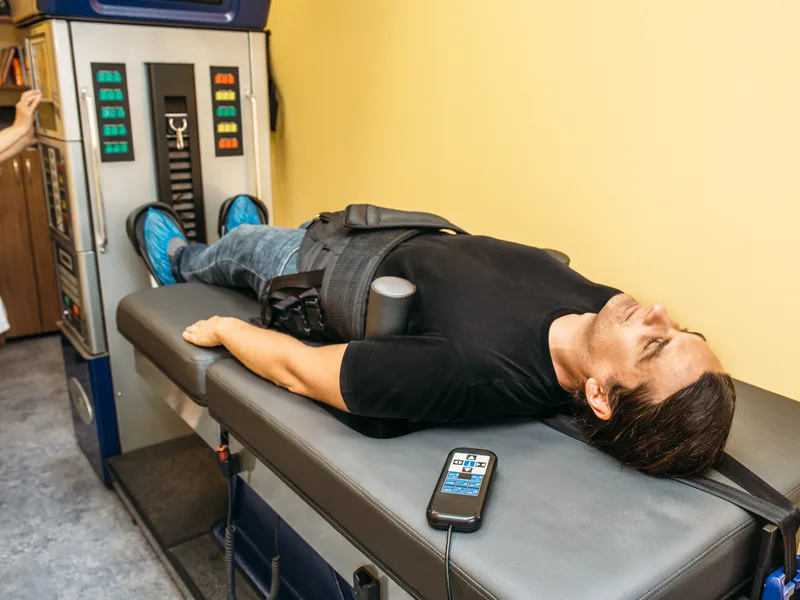
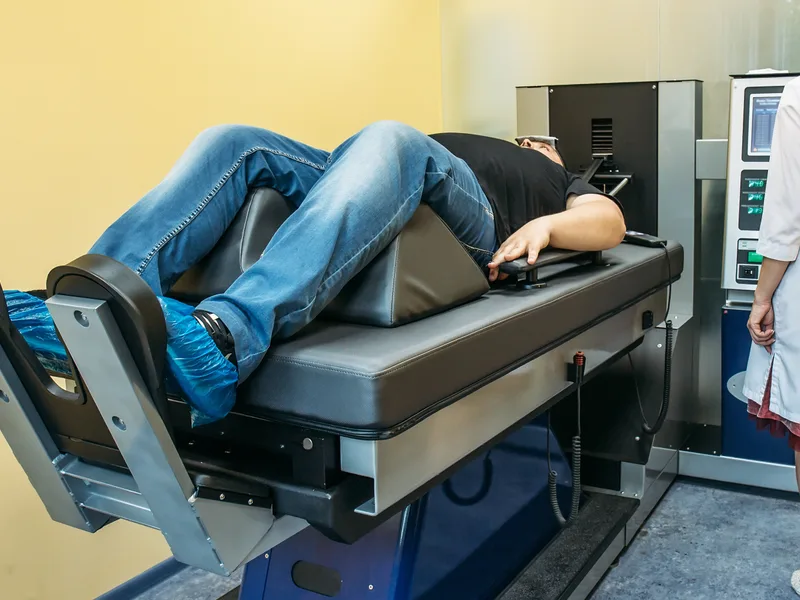
How it works
What to expect with spinal decompression
- Step 1
Thorough candidacy exam
Before your first session, our chiropractor reviews your history and performs orthopedic and neurological testing to confirm you're a good candidate and rule out contraindications — so decompression is both safe and targeted for your specific disc issue.
- Step 2
A personalized decompression plan
You receive a clear, time-bound schedule of sessions with specific tension levels and angles dialed in for your spine — not a generic protocol. We explain exactly what each stage of the plan involves and how we'll track your progress.
- Step 3
Decompression + adjustments + soft-tissue care
Each visit combines the traction session with gentle chiropractic adjustments to restore joint motion and myofascial release to settle the muscles guarding the injured disc.
Why patients choose it
Benefits of spinal decompression
Non-surgical — no incisions, anesthesia, or recovery time
Drug-free relief from disc, nerve, and radiating pain
Low-force and passive — you lie still while the table does the work
Works on the disc itself, not just the muscle around it
Pairs with chiropractic adjustments and traction therapy in one coordinated plan
A non-surgical option to consider when other conservative care hasn't helped
The basics
About spinal decompression
Your spinal discs act as cushions between the vertebrae, absorbing shock and allowing movement. When a disc bulges, herniates, or loses height from everyday wear, it can press on nearby nerves and produce pain, numbness, or weakness that radiates down the leg or arm. Traditional pain relief — rest, anti-inflammatories, injections — can quiet symptoms for a while, but they don't work on the disc itself or on the pressure against the nerve. Spinal decompression is designed to address both.
During a decompression session, the motorized table creates a controlled negative pressure inside the disc — essentially a gentle vacuum effect — that coaxes bulging material back toward center and draws oxygen-rich fluid back in to help the disc rehydrate and heal. At the same time, tight muscles and restricted spinal joints get a chance to release. Sessions run about 15–20 minutes, and you lie still on the table for all of it. We pair decompression with chiropractic adjustments and gentle flexion-distraction so the disc and the joints around it are addressed together.
New Patient Special
Your first visit for just $47
Our commitment to the community is to give everybody a chance to see how chiropractic care can help them so this offer includes:
- One-on-one consultation
- Comprehensive chiropractic exam
- X-rays (if needed)
- Report of findings
- Chiropractic adjustment
- Personalized care plan recommendations
New patient offer
$47
New patients only
Claim My $47 Visit or call (989) 208-3847We are sorry, but due to regulations, this offer excludes participants of federal aid programs such as Medicare or Medicaid.
What is spinal decompression?
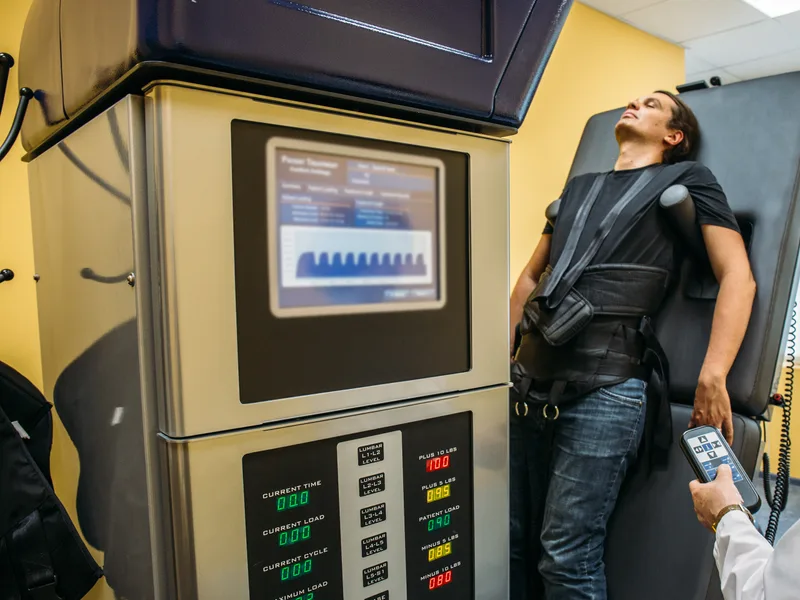
Non-surgical spinal decompression is a motorized traction therapy that gently stretches the spine in precise, computer-controlled cycles. As the table creates a carefully calibrated pull and release, negative pressure builds inside the affected disc — drawing bulging or herniated material back toward center and pulling in the oxygen and fluid the disc needs to heal. The result is less pressure on the disc itself and on the nerves running through the surrounding foramen.
Unlike older manual traction, modern computerized decompression targets a specific spinal level and angle, adapts tension in real time, and keeps the surrounding muscles from bracing against the pull. Sessions last roughly 15–20 minutes, and you lie still on the table for all of it.
What to expect
Your first visit begins with a candidacy exam. Our chiropractor reviews your history, performs orthopedic and neurological testing, and — if you’ve had recent imaging — reviews it to confirm which disc level is involved and whether decompression is the right fit. If you’re a good candidate, your personalized plan is mapped out: the number of sessions, the tension settings, and the angle of pull are all tailored to your spine.
During each session you’ll lie comfortably on the motorized table. A harness positions you so the traction is directed precisely at the target disc. The table then cycles through gentle stretch-and-release intervals while you stay still — there’s nothing for you to do. After decompression, our chiropractor typically adds a chiropractic adjustment to restore joint motion, and may follow with intersegmental traction or myofascial release so the surrounding muscles don’t tighten back down.
Decompression works cumulatively rather than in a single session, which is why a plan runs over several weeks. Each visit repeats the same controlled cycle of pressure relief on the disc, and our chiropractor re-checks where you stand as the plan goes on.
Who it helps
Spinal decompression is especially well suited for patients with:
- Herniated or bulging discs in the lower back or neck
- Sciatica — pain, numbness, or weakness running from the low back into the leg
- Pinched nerves causing arm or leg pain
- Chronic low back pain that hasn’t responded to adjustments alone
- Neck pain with radiating arm symptoms
- Degenerative disc disease causing ongoing stiffness and nerve irritation
- Leg pain or arm pain traced to a compressed spinal nerve
It works best as part of a combined plan — decompression relieves disc pressure, chiropractic adjustments restore joint mechanics, and soft-tissue care keeps the surrounding muscles from re-loading the disc. If your candidacy exam suggests surgery is the better path, we’ll tell you honestly and help coordinate that referral.
Why choose Next Level Chiropractic
Care at our Caro office is aimed at the source of the pain, not just the symptom. Our chiropractor combines computerized spinal decompression, gentle chiropractic care, and flexion-distraction into one clear, time-bound plan with a defined endpoint — and we’ll tell you honestly if decompression isn’t the right tool for your spine.
Ready to see if decompression is right for you? Our New Patient Special makes your first visit easy, and you can book an appointment online in under a minute.
What it helps
Conditions we treat with spinal decompression
Is spinal decompression safe?+
Yes. It is a non-invasive, drug-free therapy. After a thorough exam we confirm you're a good candidate before beginning a plan. We screen out contraindications — including recent fractures, certain surgical hardware, and osteoporosis — so the therapy is always appropriate for you.
What does decompression feel like?+
A gentle stretch and release across the low back or neck over about 15–20 minutes. There is no sharp pulling, and the tension is set to your comfort level and adjusted if anything feels like too much.
How many sessions will I need?+
Decompression is delivered as a course of sessions over several weeks rather than a single visit, and the number depends on how long you've had the problem and how your disc responds. Our chiropractor gives you a specific plan with a clear endpoint after your exam — not open-ended treatment.
Will my insurance cover spinal decompression?+
Coverage varies by plan. Call our Caro office at (989) 208-3847 with your insurance details and we will help you understand your benefits before your first visit.
Can decompression help a herniated or bulging disc?+
Yes — that's the primary use. The negative pressure created during traction encourages disc material to retract and rehydrate, reducing pressure on the nerves. It works well for lumbar herniation causing sciatica and cervical herniation causing arm pain.
Is decompression the same as traction?+
They're related but not identical. Traditional traction pulls the spine in one direction at a fixed tension. Computerized spinal decompression uses precise, variable-tension cycles and can be angled to target a specific disc level — allowing far more precise targeting than older manual or weighted traction.
Can decompression help neck pain and arm pain?+
Yes. Cervical decompression uses the same principle applied to the neck — gentle computer-controlled traction to relieve pressure on cervical discs and the nerves that travel into the arm. It's a common conservative option for cervical herniation, pinched nerves, and arm tingling or numbness.
Who is not a candidate for spinal decompression?+
Patients with recent spinal fractures, spinal fusion hardware in the area being treated, severe osteoporosis, active cancer in the spine, or pregnancy in the lumbar region are typically not candidates. Your candidacy exam covers all of these so we only proceed when it's the right choice.
How do I know if my back pain is disc-related?+
Disc pain often radiates into the leg (sciatica) or arm, worsens when sitting or bending forward, and may include numbness or weakness. An orthopedic and neurological exam — and imaging if needed — lets our chiropractor confirm the source and tell you whether decompression is the right tool.
What is spinal decompression used for?+
It's used for herniated and bulging discs, degenerative disc disease, sciatica, pinched nerves in the neck and low back, facet syndrome, and chronic neck or back pain that hasn't responded to other conservative care. We're honest about expected outcomes and refer out if surgery is the better path.
Explore more