
Disc Injury Treatment in Caro
Non-surgical herniated disc treatment in Caro, MI. Spinal decompression and gentle chiropractic care relieve disc pain without drugs or surgery.
Chiropractic care for disc injury
Get to the root of your disc injury
Also known as: Herniated Disc, Bulging Disc, Slipped Disc, Disc Herniation
A herniated or bulging disc can feel like your life has been put on hold — shooting pain down your leg, numbness in your fingers, or a back so stiff you can barely get out of bed. At Next Level Chiropractic in Caro, our chiropractor uses non-surgical spinal decompression and targeted chiropractic care to relieve disc pressure and get you moving again, without drugs or downtime.
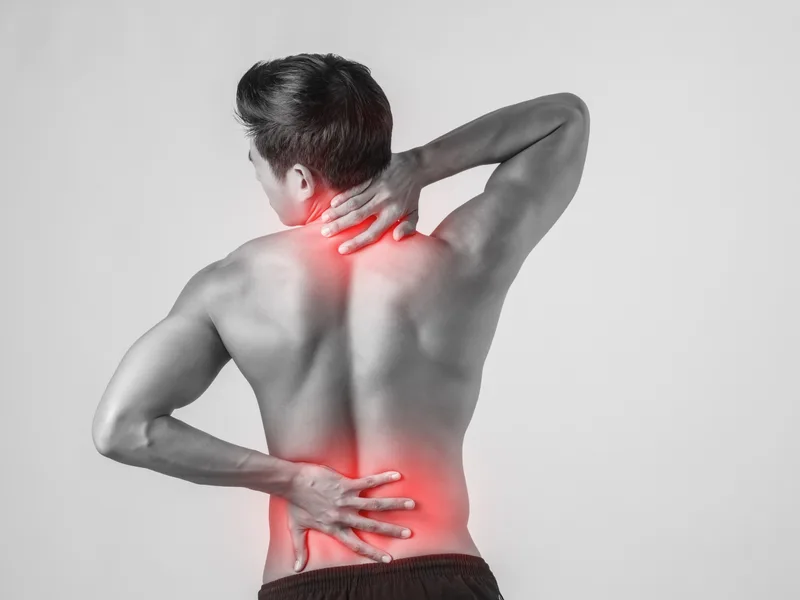
Symptoms of disc injury
- ✓Sharp or burning pain in the lower back or neck
- ✓Pain that radiates down one arm or leg (often into the hand or foot)
- ✓Numbness or tingling in an arm, hand, leg, or foot
- ✓Muscle weakness in the affected arm or leg
- ✓Pain that worsens with prolonged sitting, bending forward, or coughing
- ✓Relief when lying down or changing position
- ✓Stiffness and reduced range of motion in the spine
Common causes
- Age-related disc degeneration (discs lose water content and become less resilient)
- Heavy lifting with poor mechanics or sudden twisting
- Prolonged sitting and forward posture that loads the lumbar and cervical discs
- Repetitive occupational or athletic strain
- Trauma such as a car accident, fall, or sports impact
- Genetic predisposition to disc weakness
- Excess body weight increasing compressive load on the spine

Our approach
How we treat disc injury in Caro
- Step 1
Thorough exam
We review your history and perform orthopedic, neurological, and movement testing to locate the affected disc level and assess nerve involvement — and take or refer for imaging only when it will change your care.
- Step 2
A clear, personalized plan
You get a plain-English explanation of what we found, which disc is involved, and a specific, time-bound care plan built around decompression, adjustments, and home care — never open-ended treatment.
- Step 3
Gentle treatment & home care
Non-surgical spinal decompression gently unloads the disc while adjustments restore joint motion and home-care guidance addresses the posture and movement habits that loaded it.
The basics
Understanding disc injury
Your spine is stacked with 23 rubbery discs that sit between the vertebrae, absorbing shock and allowing movement. Each disc has a tough outer ring (annulus fibrosus) and a soft, gel-like center (nucleus pulposus). When the outer ring weakens or cracks — from a sudden injury, repetitive strain, or years of poor posture — the inner gel can bulge outward or push through entirely. That bulge or herniation can press against a nearby nerve root, triggering pain, numbness, or weakness that radiates well beyond the spine itself.
The good news is that most disc injuries respond very well to conservative, non-surgical care. Inflammation settles, disc material can retract, and nerve pressure decreases — especially when the right treatment removes the mechanical load from the disc early. We screen for the rare cases (progressive leg weakness, bowel or bladder changes) that require a surgical opinion and refer promptly, but most disc injuries never require surgery.

New Patient Special
Your first visit for just $47
Our commitment to the community is to give everybody a chance to see how chiropractic care can help them so this offer includes:
- One-on-one consultation
- Comprehensive chiropractic exam
- X-rays (if needed)
- Report of findings
- Chiropractic adjustment
- Personalized care plan recommendations
New patient offer
$47
New patients only
Claim My $47 Visit or call (989) 208-3847We are sorry, but due to regulations, this offer excludes participants of federal aid programs such as Medicare or Medicaid.
Types of disc injury we treat
Not all disc problems are the same. The types we treat include:
- Herniated disc — the inner gel has broken through the outer ring and is pressing directly on a nerve root, often causing sharp radiating pain, numbness, or weakness. See our related page on pinched nerve for how nerve compression is addressed.
- Bulging disc — the outer ring is intact but bows outward under pressure. It may irritate nearby nerves and produce symptoms similar to a full herniation, sometimes progressing to one if the load is not reduced.
- Degenerative disc disease — gradual loss of disc height and hydration over time, leading to chronic back pain, stiffness, and increased risk of herniation or nerve impingement. Non-surgical spinal decompression helps restore fluid exchange and reduce nerve irritation even in degenerative cases.
If your disc injury has already produced shooting leg pain or sciatica, see our dedicated sciatica page — the nerve and disc are treated together.
When to see a chiropractor in Caro
Disc injuries rarely fix themselves when the underlying mechanical stress is still present. Consider booking an exam if you notice:
- Pain that shoots down your leg or arm, or wraps around the rib cage
- Numbness, tingling, or a “dead” feeling in a hand or foot
- Back or neck pain that lingers more than a week or keeps returning
- Symptoms that worsen with sitting, bending, sneezing, or coughing
- Pain following a car accident, fall, or heavy-lifting incident
Seek emergency care (ER, not a chiropractic office) if you develop sudden loss of bladder or bowel control, or rapidly worsening leg weakness — these are rare but serious signs that need immediate medical evaluation.
What to expect at your first visit
Your first appointment is mostly spent understanding your problem before we treat it:
- Listen to your history — when and how the pain started, what makes it better or worse, and how it’s affecting your daily life and work.
- Examine thoroughly — orthopedic and neurological tests (straight-leg raise, dermatomal sensation, reflex and strength testing) to identify the disc level and degree of nerve involvement.
- Explain what we found — in plain English, including which disc is likely involved and whether conservative care is appropriate for you.
- Build your plan — a specific, time-bound care plan combining spinal decompression, adjustments, and home care — with a clear endpoint and realistic expectations.
Your first decompression or gentle treatment can begin the same day, once the exam confirms you’re a good candidate.
Non-surgical disc relief — without medication or surgery
Surgery and long-term pain medication are sometimes necessary — but they’re rarely the first answer for disc injuries. Chiropractic care, and specifically non-surgical spinal decompression, offers a third path: reduce the pressure on the disc and nerve, let the tissue settle and heal, and address the mechanics that loaded it in the first place.
Spinal decompression works by gently distracting the vertebrae surrounding the injured disc. The resulting negative intradiscal pressure can help retract herniated material away from the nerve, improve nutrient and fluid exchange inside the disc, and reduce the inflammatory response — all without drugs or incisions.
We combine decompression with gentle chiropractic adjustments (to restore joint motion at neighboring levels), low-force flexion-distraction when a disc-specific technique is the better fit, and home-care guidance (posture, movement, ergonomics). This multi-modal approach addresses both the pain and the mechanics driving it.
If your exam or response to conservative care ever suggests you need advanced imaging, specialist referral, or a surgical opinion, we’ll tell you honestly and help coordinate that next step.
Why choose Next Level Chiropractic
At Next Level Chiropractic, we tell you the truth about what your disc needs — and then deliver it. Our chiropractor combines evidence-based spinal decompression, precise chiropractic adjustments, and clear home-care guidance into one clear, time-bound plan designed to resolve your disc injury and keep it from returning.
Ready to find out if conservative disc care is right for you? Our New Patient Special makes your first visit easy, and you can book an appointment online in under a minute.
Why choose chiropractic
Chiropractic care vs. the typical disc-injury routine
| Comparison factor | Chiropractic Care | Pain Meds & Surgery |
|---|---|---|
| Addresses disc pressure directly | ✓Spinal decompression unloads the disc | ✕Medication masks the pain signal |
| Drug-free & non-invasive | ✓Always | ✕Rarely |
| Risk of side effects | ✓Minimal | ✕Higher (meds, surgical complications) |
| Personalized to your disc level | ✓Targeted care plan | ✕One-size-fits-all protocol |
| Home care between visits | ✓Posture, movement, and ergonomics | ✕Seldom addressed |
| Recovery approach | ✓Active & gradual | ✕Surgery recovery often months-long |
Treatment options
Services we use to relieve disc injury
Chiropractic Care
Gentle, precise chiropractic adjustments in Caro, MI that restore motion to restricted joints and relieve back pain, neck pain, and headaches at the source.
Learn more →Spinal Decompression
Non-surgical motorized spinal traction in Caro gently stretches the spine to relieve herniated discs, sciatica, and chronic neck and back pain — drug-free.
Learn more →Flexion-Distraction
Gentle flexion-distraction therapy in Caro, MI — a hands-on, non-surgical technique that decompresses the lower spine to relieve disc and sciatic pain.
Learn more →X-Rays
On-site digital X-rays in Caro, MI — ordered only when clinically needed, with low-dose modern equipment and a plain-English review of your findings the same day.
Learn more →Related conditions
Other conditions we treat in Caro
Can a herniated disc heal without surgery?+
Often, yes. Conservative care like spinal decompression can relieve pressure on the disc and nerve, giving the tissue a chance to heal and the disc material to retract. We refer for a surgical opinion whenever red flags — progressive weakness, or bowel or bladder changes — are present.
What is the difference between a herniated disc and a bulging disc?+
A bulging disc protrudes outward but the outer ring is still intact. A herniated (ruptured) disc means the outer ring has cracked and the inner gel has pushed through. Both can compress nearby nerves and cause similar symptoms; both often respond to conservative care.
How does spinal decompression help a disc injury?+
Non-surgical spinal decompression gently distracts the vertebrae, creating negative pressure inside the disc. That pressure change can help retract the bulging material, reduce nerve compression, and improve fluid exchange so the disc heals more effectively.
How do I know if my back pain is disc-related?+
Disc pain often radiates into a limb, worsens with sitting or bending, and may come with numbness or tingling. A thorough orthopedic and neurological exam — and sometimes imaging — is the reliable way to know. Book an exam and we'll give you a clear answer.
How many visits will I need?+
It depends on which disc is involved, how long you've had symptoms, and how your body responds. After your exam, our chiropractor gives you a specific, time-bound plan with a realistic endpoint — not open-ended visits.
Do I need an MRI before coming in?+
Not necessarily. Most disc injuries can be assessed clinically on the first visit. We take X-rays or refer for advanced imaging only when the result would change your care plan — and we explain exactly when and why.
Is chiropractic adjustment safe when I have a disc injury?+
Yes, when the technique is appropriate for the condition. We modify our approach for disc patients — using gentler, low-force methods such as flexion-distraction and often combining them with decompression — and we screen for contraindications before any treatment begins.
What red flags should send me to the ER instead of a chiropractor?+
If you experience sudden loss of bladder or bowel control, rapidly progressive leg weakness, or severe pain following major trauma, go to an emergency room immediately. These signs suggest a more serious injury that needs urgent medical evaluation.
Can disc injuries come back after they heal?+
They can if the underlying mechanics — core weakness, poor posture, movement habits — are not addressed. That's why our plans include home-care guidance on posture, movement, and lifting, so the mechanics that stressed the disc aren't still doing it.
Do you treat cervical (neck) disc injuries as well?+
Yes. Cervical disc injuries cause arm pain, hand numbness, and neck stiffness and are treated with the same combination of decompression, gentle adjustments, and home care we use for lumbar discs.
Will my insurance cover disc treatment?+
Coverage varies by plan. Call our Caro office at (989) 208-3847 with your insurance details and we will help you understand your benefits before your first visit.